
Glutathione
Glutathione: Research Compound Overview
Glutathione (GSH) is a naturally occurring tripeptide composed of glutamate, cysteine and glycine, in which the glutamate is joined through its side-chain (gamma) carboxyl group rather than the usual alpha-peptide bond. It is the most abundant low-molecular-weight thiol in most cells and is a central subject of redox biochemistry research.
| CAS number | 70-18-8 |
|---|---|
| Molecular formula | C10H17N3O6S |
| Molecular weight | 307.32 g/mol |
| Sequence | γ-Glu-Cys-Gly (gamma-L-glutamyl-L-cysteinyl-glycine) |
| Storage | Store lyophilized at -20 °C, desiccated, protected from light. |
Chemical identity & structure
Reduced glutathione is the tripeptide gamma-L-glutamyl-L-cysteinyl-glycine. The unusual gamma-glutamyl linkage protects the molecule from most cellular peptidases, and the free sulfhydryl (-SH) group of the cysteine residue is responsible for its redox activity. Two GSH molecules can be oxidized to form glutathione disulfide (GSSG), linked through a disulfide bridge.
- CAS number: 70-18-8 (reduced form)
- Molecular formula: C10H17N3O6S
- Molecular weight: 307.32 g/mol
- Sequence: γ-Glu-Cys-Gly
- Synonyms: GSH, reduced glutathione, L-glutathione
- Class: endogenous thiol tripeptide
The ratio of GSH to GSSG is widely used in the literature as a readout of cellular redox status, so the oxidation state of research material is an important quality attribute.
Commercial glutathione is almost always supplied in the reduced form, but GSSG is also available as a separate reagent for redox-buffer work. Other related species that may be monitored during quality testing include gamma-glutamylcysteine, cysteinylglycine and mixed disulfides. The ionizable thiol, carboxyl and amino groups mean that the net charge of GSH changes across the physiological pH range, which affects its chromatographic retention.
Mechanisms studied in the literature
Glutathione chemistry centres on the nucleophilic thiol of its cysteine residue. Researchers have characterized several enzyme systems that use GSH as a substrate or cofactor:
- Glutathione peroxidases (GPx): reduce hydrogen peroxide and lipid hydroperoxides while oxidizing GSH to GSSG.
- Glutathione reductase: regenerates GSH from GSSG using NADPH as the electron donor.
- Glutathione S-transferases (GSTs): conjugate GSH to electrophilic compounds, a key step in the mercapturic acid pathway of xenobiotic metabolism.
- Glutaredoxins: use GSH to reduce protein disulfides and to reverse protein S-glutathionylation, a reversible post-translational modification studied in redox signalling.
Biosynthesis occurs in two ATP-dependent steps. Glutamate-cysteine ligase (GCL) forms gamma-glutamylcysteine, which is generally regarded as the rate-limiting step, and glutathione synthetase then adds glycine. Lu (2013) reviews how GCL is regulated by substrate availability, feedback inhibition by GSH and transcriptional control, including the Nrf2 pathway. Extracellular breakdown is initiated by gamma-glutamyl transpeptidase, which allows constituent amino acids to be taken back up by cells.
Meister and Anderson (1983) and Forman, Zhang and Rinna (2009) provide foundational reviews of these pathways and of methods used to measure GSH and GSSG in biological samples.
Areas of published research
Glutathione is studied across many disciplines. Principal research areas include:
- Redox biology and oxidative stress: use of the GSH/GSSG couple as a marker of cellular redox environment.
- Xenobiotic and drug metabolism: GST-mediated conjugation and the depletion of hepatic GSH in toxicology models.
- Neurochemistry: the distribution of GSH between astrocytes and neurons and its handling in brain tissue, reviewed by Dringen (2000).
- Ferroptosis research: the dependence of GPX4 activity on GSH and the effect of GSH depletion in cell-death models.
- Protein chemistry: GSH/GSSG redox buffers used in in-vitro oxidative protein folding and disulfide-bond formation.
- Cell culture methods: GSH as a medium component and as a tool for manipulating intracellular thiol status.
Glutathione has also been investigated in clinical research, and analytical methods for its measurement in biological fluids remain an active area of method development.
In analytical chemistry, glutathione is frequently used as a reference standard. Quantification approaches described in the literature include enzymatic assays coupling glutathione reductase with DTNB (the Tietze method), derivatization with fluorogenic reagents such as monobromobimane or o-phthalaldehyde followed by HPLC, and LC-MS/MS methods with isotope-labelled internal standards. Sample handling is a recurring theme, because thiols can oxidize during collection and processing, and alkylating agents such as N-ethylmaleimide are often used to stabilize the reduced form before analysis.
Handling, reconstitution chemistry & storage
Reduced glutathione is a white crystalline or lyophilized powder that is freely soluble in water. The dry solid is comparatively stable when kept cold, dry and sealed; storage at -20 °C, desiccated and protected from light, is recommended for long-term holding. Vials should be warmed to room temperature before opening to avoid moisture uptake.
In solution, the main concern is oxidation of the thiol to GSSG. Auto-oxidation is accelerated at neutral to alkaline pH, at elevated temperature, and in the presence of trace transition-metal ions such as copper and iron. Laboratories commonly prepare GSH solutions fresh, use degassed or deoxygenated buffers, add a metal chelator such as EDTA where compatible with the assay, and keep stocks on ice. Aqueous GSH solutions are mildly acidic, so pH should be checked and adjusted when the experiment is pH-sensitive.
Thiol content can be verified with Ellman's reagent (DTNB), and HPLC can resolve GSH from GSSG to confirm the oxidation state of a stock before use.
Quality documentation
Every CheatCodes lot of glutathione is analyzed before release. Reversed-phase high-performance liquid chromatography (HPLC) with UV detection is used to quantify chromatographic purity as an area-percent value and to reveal related substances, truncated species or degradation products. Mass spectrometry (MS) confirms that the principal peak carries the expected molecular mass, so identity and purity are documented independently of each other.
The lot-specific Certificate of Analysis (COA) for each batch is published in the CheatCodes COA library, under the glutathione entry. A COA typically records the lot number, test date, HPLC chromatogram and purity figure, the observed mass, and the appearance of the lyophilized material. Researchers can match the lot number printed on the vial label to the corresponding COA.
Lot traceability matters for reproducibility. Minor differences in purity, counter-ion content or residual moisture between batches can shift apparent potency in an assay, so recording the lot number alongside experimental data allows variation to be traced to its source. Many laboratories file the COA with their notebook records and cite the lot in methods sections so that other groups can reproduce the experimental conditions as closely as possible.
Frequently asked questions
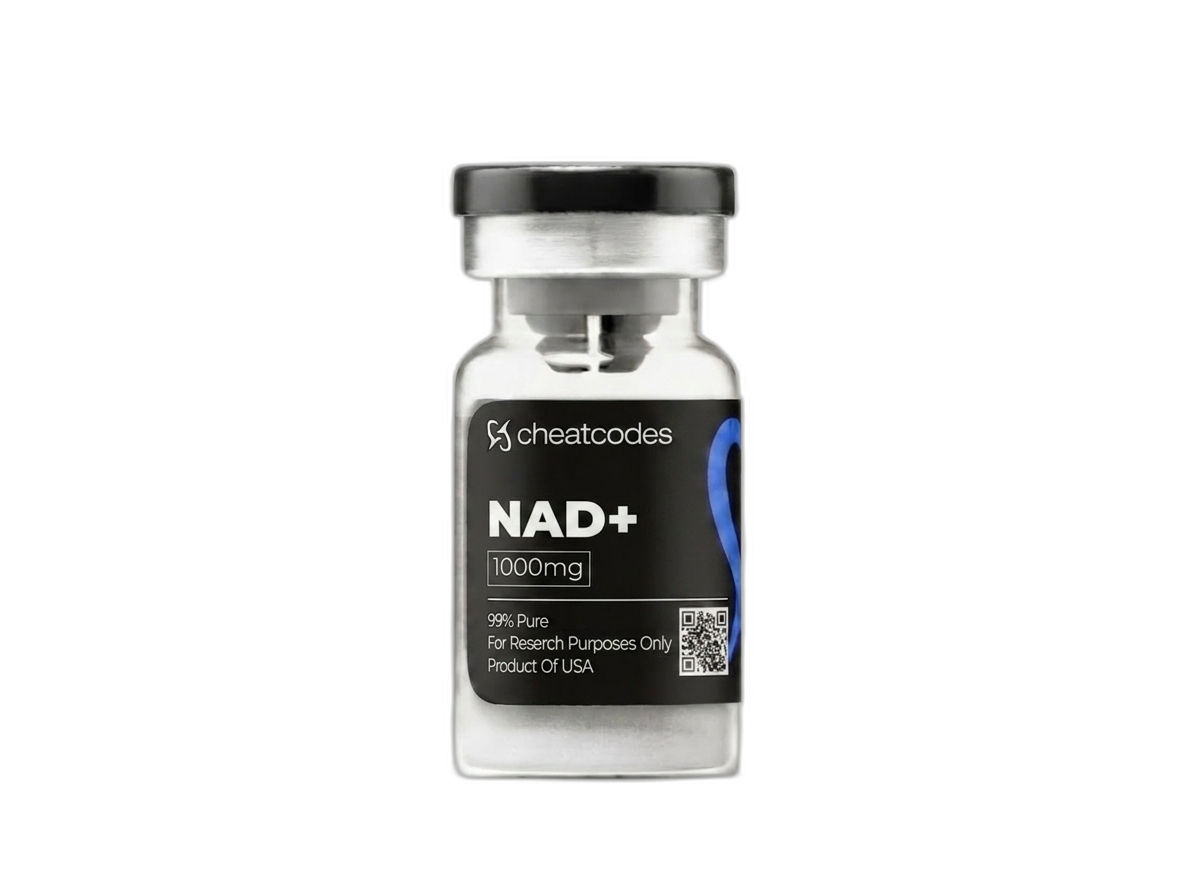
Research-grade Glutathione in stock
Glutathione · $49.99
All products are supplied for laboratory research use only. They are not intended for human or animal consumption, and have not been evaluated by the FDA for the diagnosis, treatment, cure, or prevention of any disease.
References
- Glutathione: overview of its protective roles, measurement, and biosynthesis. Molecular Aspects of Medicine (2009).
- Glutathione synthesis. Biochimica et Biophysica Acta (BBA) - General Subjects (2013).
- Glutathione. Annual Review of Biochemistry (1983).
- Metabolism and functions of glutathione in brain. Progress in Neurobiology (2000).