
BPC-157
BPC-157: Research Compound Overview
BPC-157 ("body protection compound 157") is a synthetic pentadecapeptide whose sequence corresponds to a partial sequence of a protein isolated from human gastric juice. It was first described by Sikiric and colleagues in the early 1990s and is noted in the literature for its stability in gastric juice.
| CAS number | 137525-51-0 |
|---|---|
| Molecular formula | C62H98N16O22 |
| Molecular weight | 1419.56 g/mol |
| Sequence | GEPPPGKPADDAGLV (Gly-Glu-Pro-Pro-Pro-Gly-Lys-Pro-Ala-Asp-Asp-Ala-Gly-Leu-Val) |
| Storage | Store lyophilized at -20 °C, desiccated, protected from light. |
Chemical identity & structure
BPC-157 is a linear 15-residue peptide with the sequence GEPPPGKPADDAGLV (Gly-Glu-Pro-Pro-Pro-Gly-Lys-Pro-Ala-Asp-Asp-Ala-Gly-Leu-Val).
- CAS number: 137525-51-0 (free peptide); the acetate salt is listed by suppliers under CAS 1628202-19-6
- Molecular formula: C62H98N16O22
- Molecular weight: approximately 1419.56 g/mol
- Length: 15 amino acids
The sequence is notably proline-rich, including a Pro-Pro-Pro motif near the N-terminus, which restricts backbone flexibility and is thought to contribute to the peptide's resistance to proteolytic degradation. It carries three acidic residues (Glu, Asp, Asp) and one basic residue (Lys), giving it a net negative charge at neutral pH. The sequence contains no cysteine, methionine or tryptophan, so it lacks the most common oxidation-sensitive side chains. Research material is produced by solid-phase peptide synthesis.
Mechanisms studied in the literature
Much of the BPC-157 literature originates from rodent models, and several mechanistic hypotheses have been investigated.
Angiogenic signalling. Hsieh et al. (Journal of Molecular Medicine, 2017) reported that BPC-157 increased VEGFR2 expression and activation, with downstream Akt–eNOS signalling, in human vascular endothelial cell culture, and examined vascular responses in a rat hind-limb ischemia model.
Nitric oxide system and the brain–gut axis. Sikiric et al. (Current Neuropharmacology, 2016) reviewed work describing interactions between BPC-157 and the nitric oxide system, along with studies in rodent models of dopaminergic and serotonergic disturbance, framing the peptide within brain–gut axis research.
Metabolic fate. Cox et al. (Drug Testing and Analysis, 2017) characterized the in-vitro metabolism of BPC-157 and identified fragment products, alongside LC–MS methods for its detection. Pharmacokinetic and distribution studies in rats and dogs have also been published.
A 2025 literature and patent review by Józwiak et al. (Pharmaceuticals) summarizes the breadth of preclinical findings and notes that controlled human data remain scarce.
Areas of published research
Published research on BPC-157 is concentrated in the following areas:
- Gastrointestinal research: mucosal integrity and lesion models in rodents, reflecting the peptide's gastric origin.
- Musculoskeletal and connective tissue research: tendon, ligament and muscle injury models in rats, and tendon fibroblast cell culture.
- Vascular biology: angiogenesis, endothelial signalling and nitric oxide pathways.
- Neuroscience: brain–gut axis studies and rodent models involving dopaminergic and serotonergic systems.
- Analytical and anti-doping chemistry: detection, metabolite identification and characterization of seized products.
BPC-157 has been investigated in clinical research only to a limited extent and is not an approved drug. It is listed on the World Anti-Doping Agency prohibited list. CheatCodes supplies it strictly as a research-use-only reference material for laboratory investigation.
Because a large share of the published studies originate from a small number of research groups, reviewers have noted the value of independent replication, standardized analytical characterization of the test material, and clear reporting of peptide source and purity. Well-documented reference material supports this kind of reproducibility work.
Handling, reconstitution chemistry & storage
BPC-157 is supplied as a lyophilized (freeze-dried) powder. In the dry state, peptides of this kind are generally most stable when kept at -20 °C or below, sealed, desiccated and protected from light. Vials should be allowed to reach room temperature before opening so that atmospheric moisture does not condense on the powder, since absorbed water can accelerate hydrolysis and aggregation.
BPC-157 has been described as unusually stable among small peptides, including in gastric juice, but standard precautions still apply. The free peptide is acidic overall and is generally soluble in water and dilute aqueous buffers. Because it lacks methionine and cysteine, oxidation is a lesser concern than for many peptides, while isomerization and hydrolysis at aspartate residues remain possible degradation routes over extended time in solution.
Once in solution, peptides are considerably less stable than in lyophilized form. Common laboratory practice is to prepare a concentrated stock in a suitable sterile solvent, divide it into single-use aliquots, and store the aliquots frozen to avoid repeated freeze–thaw exposure. Solutions should be protected from light and from microbial contamination, and buffer pH should be selected with the peptide's isoelectric behaviour and the downstream assay in mind.
Before use in quantitative work, researchers commonly verify concentration independently, for example by UV absorbance where aromatic residues are present or by amino-acid analysis, because lyophilized peptide powders contain variable amounts of counter-ion and residual water. Glass or low-binding polypropylene vials help reduce adsorptive losses at low concentrations.
Quality documentation
Every CheatCodes lot of BPC-157 is analyzed by reverse-phase HPLC for chromatographic purity and by mass spectrometry for identity confirmation, with the observed mass compared against the theoretical value for the expected sequence. The findings of that analysis are recorded on a lot-specific certificate of analysis (COA), which is published in the CheatCodes COA library and can be matched to the lot number printed on each vial.
Lot traceability matters for reproducibility. Synthetic peptides can differ between batches in purity, counter-ion content (for example acetate or trifluoroacetate), water content and the profile of minor related impurities such as deletion or truncated sequences. Recording the lot number alongside experimental data allows a laboratory to compare runs across material batches, to investigate unexpected variation, and to report the analytical characterization of the material in methods sections. Researchers are encouraged to retain the COA with their laboratory records and to confirm that net peptide content, rather than gross powder weight, is used when preparing stock solutions.
A certificate of analysis for a synthetic peptide generally identifies the compound name, lot number and test date, reports HPLC purity as a percentage of total peak area, and records the mass observed by MS against the expected value. Reviewing these fields before an experiment confirms that the material on the bench matches the material described in the laboratory record.
Frequently asked questions
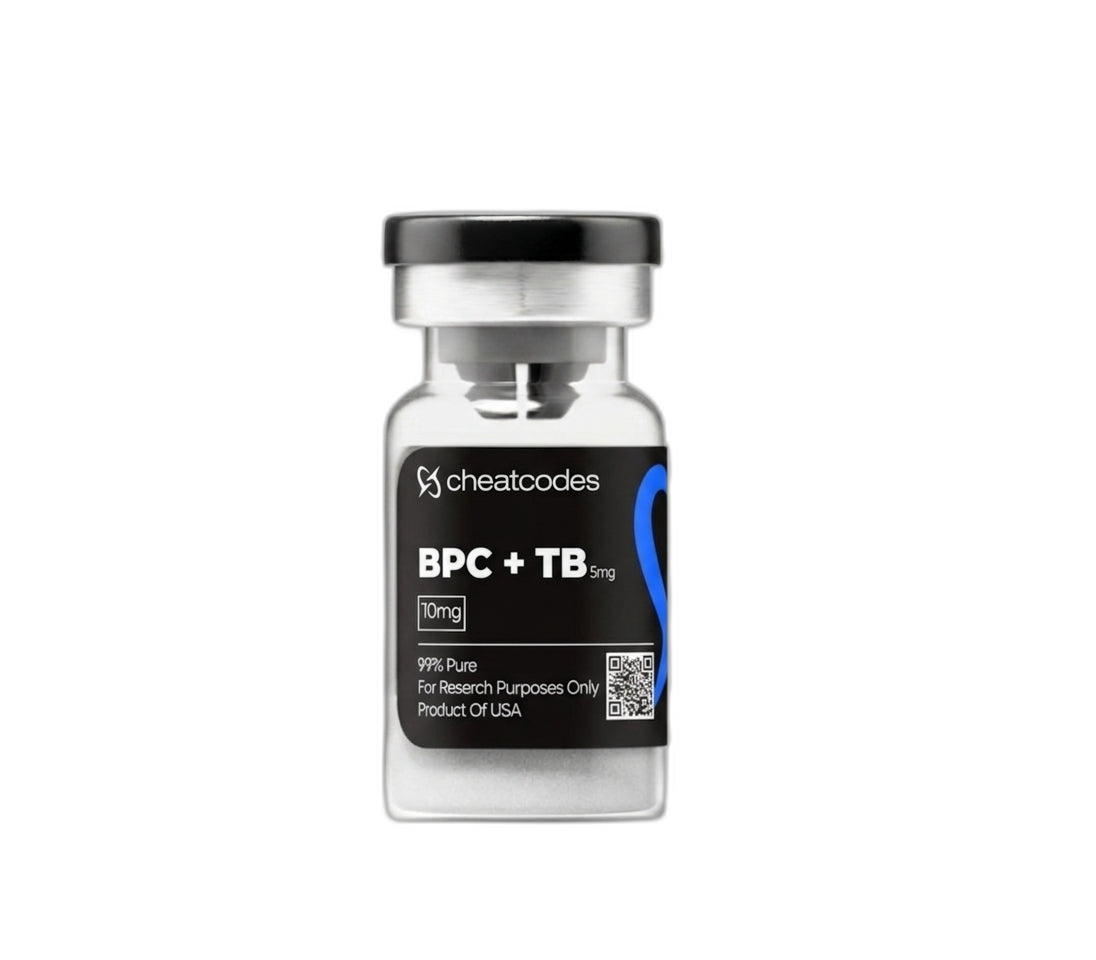
Research-grade BPC-157 in stock
BPC-157 · $24.99 – $44.99
All products are supplied for laboratory research use only. They are not intended for human or animal consumption, and have not been evaluated by the FDA for the diagnosis, treatment, cure, or prevention of any disease.
References
- Brain-gut Axis and Pentadecapeptide BPC 157: Theoretical and Practical Implications. Current Neuropharmacology (2016).
- Therapeutic potential of pro-angiogenic BPC157 is associated with VEGFR2 activation and up-regulation. Journal of Molecular Medicine (2017).
- Detection and in vitro metabolism of the confiscated peptides BPC 157 and MGF R23H. Drug Testing and Analysis (2017).
- Multifunctionality and Possible Medical Application of the BPC 157 Peptide: Literature and Patent Review. Pharmaceuticals (2025).